
If I Forget Thee: The History of Hadassah on Mt. Scopus (film #11 in the Health section of the State of Israel section of Stephen Spielberg Jewish Film Archive). [Category: Public Service]
This 70s film gives an overview of the history of the Hadassah Hospital on Mt. Scopus in Jerusalem, from pre-state Palestine to the present days of renovation. War, terrorism, and violence are a part of this story at many points. The film provides a sense of context to the other Hadassah Hospital films on the Spielberg Archive, helping the viewer to figure out where those other films fit into the bigger picture. The story is well told and touching at times, though there are few surprises. But it’s a historically valuable film that would be good to watch before the other Hadassah Hospital films on the site.Ratings: Camp/Humor Value: N/A. Weirdness: **. Historical Interest: ****. Overall Rating: ***.
Dragoons Crossing the Saone (film #13 on The Movies Begin, Volume One: The Great Train Robbery and Other Primary Works (Kino Video, 1994)). Also, film #13 on The Art of Cinema Begins (Video Yesteryear, 1997)). [Category: Early Film & TV]
A bunch of shirtless guys on horseback ford a river. Not particularly interesting, as the shirtless guys aren't particularly good-looking (well, where else can interest be found in such a film?). An 1896 Lumiere film.Ratings: Camp/Humor Value: *. Weirdness: *. Historical Interest: ***. Overall Rating: *.
The Andy Griffith Show #1 (film #1 on Side A of Disc #8 of TV Favorites DVD Megapack (Treeline Films, 2003)). [Category: Outtakes & Obscurities]
This early 60s episode of The Andy Griffith Show features Rafe Hollister, a country bumpkin with a beautiful singing voice. When he wins an audition to sing and the Ladies’ Club Musicale, the snooty mayor tries to object, thinking Hollister too white trash (they’re too nice to use the term, but it’s obvious that’s what was meant) to represent Mayberry. Of course it all turns out well in the end when they hear Hollister sing. This is a charming episode with a the kind of fluffy problem typical to the show. What I was waiting for, though, was for Andy’s guitar to blow up while they were singing “Those Endearing Young Charms.” Sadly, it never happens.Ratings: Camp/Humor Value: ***. Weirdness: ***. Historical Interest: ****. Overall Rating: ***.
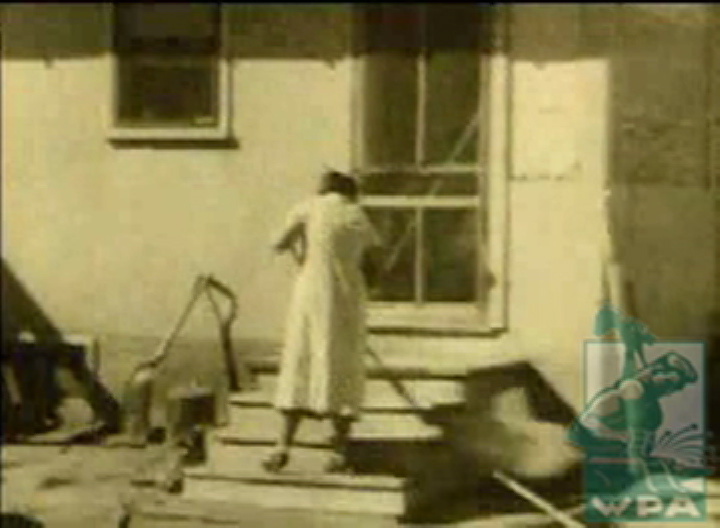
The Dust Bowl (film #6 in the 1929 Stock Market Crash and Great Depression section of WPA Film Library). [Category: News]
Newsreel footage, mostly silent, of parched farmlands, dust storms, and rural people battling dust. Most of this is sepia-tone, so it really has an old-time feel to it. The last clip is from a British sound newsreel reporting the dust bowl refugees immigrating to California. These clips are historically interesting, giving you a real feel for the long-term disaster of the Dust Bowl.Ratings: Camp/Humor Value: N/A. Weirdness: ***. Historical Interest: *****. Overall Rating: ****.

The Battle of France (film #516 on Universal Newsreels). [Category: Military & Propaganda]
Newsreel story about the Allied drive across France after D-Day. This is pretty standard, though there are a few striking images of soldiers and prisoners of war. Unfortunately, the footage is murky, so it’s hard to see those striking images.Ratings: Camp/Humor Value: *. Weirdness: *. Historical Interest: ***. Overall Rating: ***.
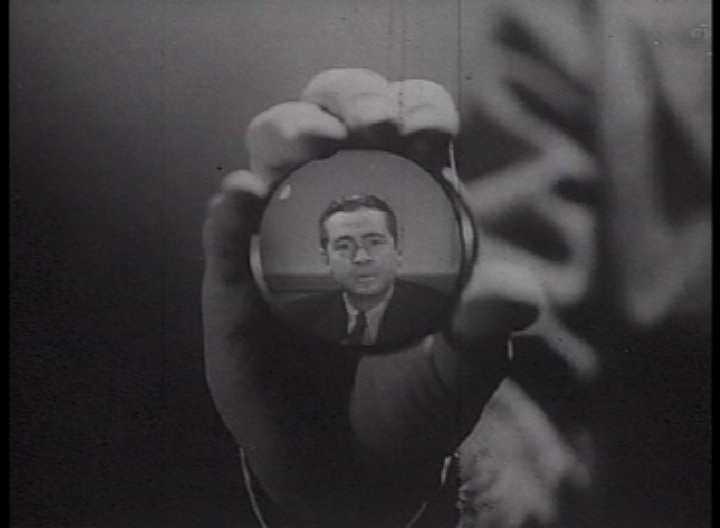
The Face in the Mirror (I Wonder) (in the Ephemeral section of Open Video Project. Also, film #493 on Prelinger Archive). [Category: Industrial]
I was utterly charmed by this Jam Handy sales training film. In it, a salesman on his day off gets sent by his wife on a shopping spree in one of those downtown areas that don’t exist anymore. There he deals with salesmen from terrible to excellent in all the different stores he goes into. And this was in the days before self-service in retail, so he has to deal with salesmen in all of them. After buying a bunch of stuff, he drops in on his boss (why, I don’t know, since it’s his day off––must be a workaholic) who encourages him to use the experiences he had with salesmen that day to help him sell better himself. This is actually one of the most effective Jam Handy films I’ve seen. Although working in sales is anathema to me, I found myself being swept along by the message of this film that selling mainly involves being friendly, helpful, and considerate of your customers, along with knowing your product and being enthusiastic about it. The successful salesmen show a masterful knowledge of psychology in the way they smoothly convince the main character to buy without making him feel like he’s been sold something. And the simple, commonsense advice given in the film makes sales seem a much friendlier, and less exploitative, a profession. The film is also appealing from a historical perspective, in showing a way of shopping that doesn’t exist anymore. Jam Handy has made some stinkers, some howlers, and some films that are extremely weird, but this film shows that when he was at his best, his films were right on the money in conveying the message they were designed to convey.Ratings: Camp/Humor Value: ***. Weirdness: ***. Historical Interest: *****. Overall Rating: *****.
The Effects of Atomic Bomb Explosions (film #2 on Atomic Memories (Video Yesteryear)). [Category: Military & Propaganda]
This film has a real campy opening: an army officer on furlough encounters a culture gone atom-crazy ("That guy's got a punch like an atom bomb!" "Try our Atomic Cocktail") and lots of ordinary folks with outrageous misconceptions about the bomb ("What scares me is that awful gas that deforms ya!"). Back from leave, he relates his experiences to his commanding officer, played by Hugh Beaumont, and Dad––uh, I mean Hugh––has a man-to-man talk with him, setting him straight on the facts of life about the a-bomb. Actually, this is one of the few cold-war propaganda films from this period that doesn't grossly underestimate or gloss over the destructive effects of the bomb. Of course, it was made to be shown to army personnel, rather than average citizens––the average folk were watching things like Duck and Cover and You Can Beat the A-Bomb, in which the bomb only musses things up a bit (which nobody believed). So no wonder people were confused. A great relic of the Cold War.Ratings: Camp/Humor Value: ****. Weirdness: ***. Historical Interest: *****. Overall Rating: ****.
The Barber Shop (film #1 on Six Short Films: W.C. Fields DVD (The Criterion Collection, 2000)). [Category: Hollywood]
W. C. Fields plays a small town barber in this short, and all I can say is don’t allow him near your face, or any other part of your body, for that matter. The short has the usual cranky wife, bizarre plot, and witty Fields asides you expect from one of his films. There’s also a perfunctory chase scene with a bank robber and an ending where you find out where tiny violins come from. As usual with Fields, this is inspired strangeness, with a creakiness that makes you feel like you’re in the 19th century instead of the 20th.Ratings: Camp/Humor Value: ****. Weirdness: *****. Historical Interest: *****. Overall Rating: ****.
From Beatnik to Beauty (film #8 in the Makeovers, Diets & Fitness section of WPA Film Library). [Category: Hollywood]
In this clip from a British newsreel featurette, a swinging beatnik chick goes into a beauty shop full of staid, girdle-wearing middle-aged suburban women and, through the miracle of “the deception that is a part of a modern women’s lifestyle,” gets transformed into a staid, girdle-wearing, middle-aged (her “beauty treatment” ages her at least 20 years) woman who is all ready to find a nice husband and move into the suburbs. More horrorific than The Stepford Wives, because such places actually exist! One of the campiest films from the WPA Film Library, which is usually pretty staid itself.Ratings: Camp/Humor Value: *****. Weirdness: ****. Historical Interest: ****. Overall Rating: ****.
Burns & Allen Show #6 (film #6 on Side A of Disc #4 of TV Favorites DVD Megapack (Treeline Films, 2003)). [Category: Early Film & TV]
More inspired wackiness from George and Gracie. This one features a pair of teenagers from the pre-rock ‘n’ roll days, as well as George and Gracie doing a mean jitterbug themselves. Gracie’s wackiness is in full flower and Bill Goodwin makes a strawberry shortcake in a suitcase. This is a real early TV relic that is both historically fascinating and a piece of comedy that holds up well today.Ratings: Camp/Humor Value: *****. Weirdness: ****. Historical Interest: *****. Overall Rating: *****.
Connecticut (film #369 on Prelinger Archive). [Category: Educational]
Standard-issue educational film about Connecticut, with flowery prose that makes you almost think it’s a travelogue, but then it ends with “Now let’s review what we’ve learned about Connecticut…,” which puts it squarely in the educational category. No surprises here.Ratings: Camp/Humor Value: *. Weirdness: *. Historical Interest: ***. Overall Rating: **.
Battle Beyond the Sun Trailer (extra on Rocket Ship DVD (Sinister Cinema)). [Category: Commercial]
This trailer for a 60s outer space mission film made me giggle the minute I saw it. Perhaps it’s because it opens with a battle between two incredibly ridiculous-looking monsters that I can only describe by saying they are two different versions of the Horrifying Vagina with Teeth, though too silly-looking to generate much fear even with the Freudian implications of their appearance. To add to the fun, many of the titles are in a wacky 60s font that changes in size to produce text blocks in fun shapes. The rest of the trailer is standard cheap sci-fi fare, but the monsters really make this one.Ratings: Camp/Humor Value: *****. Weirdness: ****. Historical Interest: *****. Overall Rating: *****.
Challenge of the Negev (film #4 in the Rural Settlement and Security section of the State of Israel section of Stphen Spielberg Jewish Film Archive). [Category: Sleaze & Outsider]
This early 50s film chronicles the development of the Negev desert in Israel from a barren wasteland to a place where agriculture is possible and where some of the thousands of Jews coming into Israel can settle. This is told in great detail and this gives the film quite a bit of historical interest, especially for those interested in the early development of the modern nation of Israel. It’s told rather dryly, though, which makes it drag after awhile. Still, those interested in the history of Israel will definitely want to check this out.Ratings: Camp/Humor Value: *. Weirdness: **. Historical Interest: ****. Overall Rating: ***.
The Dog and His Various Merits (film #31 on The Movies Begin, Volume One: The Great Train Robbery and Other Primary Works (Kino Video, 1994). Also, film #31 on The Art of Cinema Begins (Video Yesteryear, 1997)). [Category: Early Film & TV]
Various types of working dogs are shown, and this gives you a chance to see some sights you don't see today, such as a legless beggar on one of those flat wheeled platforms that he pushes with a couple of handled objects that look like irons, or a milkman delivering milk using a large milk can with wheels and a dog harness. An interesting turn-of-the-century (the 19th to the 20th, I mean; I still can't get used to the fact that we're in the "turn of the century" now) relic. A 1908 Biograph film.Ratings: Camp/Humor Value: **. Weirdness: ****. Historical Interest: *****. Overall Rating: ****.
I Came to Beersheva (film #3 in the Cities section of the State of Israel section of Stephen Spielberg Jewish Film Archive). [Category: Public Service]
Two brothers from Morocco come to the city of Beersheva in Israel. There they are educated and trained in job skills by the Youth Allyah organization. That’s about all I can tell you, as the film is narrated in French, or some language like it (unfortunately, the archive lists the language as English, but it’s no English I’ve ever heard). This has lots of images of the life of Moroccan Jews in Israel, so that gives it some historical value. But if you don’t speak the language, it’s impossible to follow.Ratings: Camp/Humor Value: *. Weirdness: *. Historical Interest: ***. Overall Rating: **.
The Ducktators (film #6 on V for Victory WWII Cartoons & Shorts Show, Vol. 1 (Something Weird, 1996). Also, film #11 on WWII Cartoons, Vol. 1 VCD (Authentic History Center)). [Category: Military & Propaganda]
A Hitler duck, a Mussolini duck, and a Tojo duck take over a barnyard, much to the dismay of the Dove of Peace, who, in the end, decides to beat the crap out of them. So much for peace. This Warner Brothers toon is not one of their best, but it is one of the most representative of all wartime toons, with plenty of gags that would never pass muster today. Possibly the most offensive is when the Tojo duck shows an angry turtle a button that says, "I Am Chinese," which seems to imply that most Chinese were really Japs in disguise. Watch for Daffy Duck in a very non-PC cameo.Ratings: Camp/Humor Value: ***. Weirdness: ****. Historical Interest: *****. Overall Rating: ****.
Amitrock (film #19 in the Action section of Brickfilms. Also, film #6 in the Music Video section of Brickfilms). [Category: Outtakes & Obscurities]
This is basically just one action sequence featuring Lego guys after another, while electronic music plays on the soundtrack. I found this boring for the most part, but the last third of it picks up a bit as the music gets faster and the action on screen gets weirder. An oddity.Ratings: Camp/Humor Value: **. Weirdness: ****. Historical Interest: ***. Overall Rating: ***.
Frogland (track #6 on Weird Cartoons (Rhino, 1987)). [Category: Hollywood]
Foolish frogs pray to the god Jupiter for a king, but they get more than they bargained for. This early, silent example of stop-motion animation has some great character animation. The different frogs are fun to watch and their foolishness is quite human, making the cartoon quite satirical at certain points (especially the frog politicians!).Ratings: Camp/Humor Value: ***. Weirdness: ****. Historical Interest: ****. Overall Rating: ****.

Assassination Attempt on Ronald Reagan (film #4 in the Featured Clip Library section of WPA Film Library). [Category: News]
Short tv news clips of the assassination attempt on President Reagan, and his later return to the White House after being hospitalized. This is pretty straightforward, having historical value as an event that was televised as it happened. Reagan’s narration of his experience during the first clip adds interest to it.Ratings: Camp/Humor Value: *. Weirdness: **. Historical Interest: ****. Overall Rating: ***.
Subscribe to:
Posts (Atom)
Better Reading
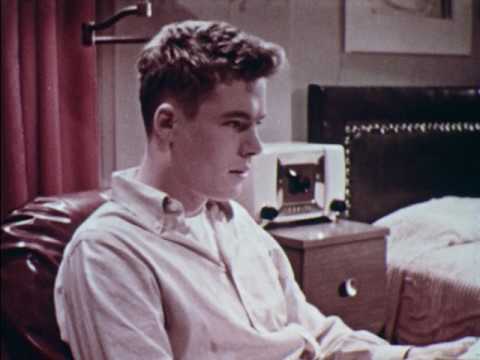
Better Reading . Teenager Harold Wilson has a problem—he can’t read for (expletive deleted). So he has to spend all his free time studying ...
-
Better Reading . Teenager Harold Wilson has a problem—he can’t read for (expletive deleted). So he has to spend all his free time studying ...
-
Buffalo Bill, Jr. – A Bronc Called Gunboat (film #4 on Disc #2 of Classic Kids’ Shows DVD (Genius Entertainment, 2004)). [Category: Early F...
-
Annie Oakley – Annie and the First Phone (film #15 in the Classic TV section of Movieflix ). [Category: Early Film & TV] This early-50s ...
