Showing posts with label Public Service. Show all posts

Anatomy of a Triumph

Anatomy of a Triumph. It’s MAN again, discovering flight and conquering the skies! Will he never stop in his quest for manliness? This early 70s government film starts off bombastically, then settles down to document the history of flight from Kitty Hawk to Apollo 11. We get to see the usual wacky early films of failed attempts at flight at the beginning, which I always find amusing. Then it’s on to working airplanes, Lindbergh, World Wars I and II, and the first rockets, which were invented by Nazis. But who cares about that? This is about MAN’s conquest of space, by golly! The Russians have launched Sputnik, so now the race is on! We get to see more embarrassing footage of the U.S.’s first failed attempts at space flight, and then the final success of the Apollo II mission. Richard Nixon ends the film with congratulatory messages, the film being blissfully ignorant of his embarrassments to come.

Ratings: Camp/Humor Value: ***. Weirdness: ***. Historical Interest: ****. Overall Rating: ***.

Agriculture in Virginia

Agriculture in Virginia. Rural teenager Bud Wilson (Why does that name sound familiar to me? This name must have appeared in other educational films.) is planning on following in his farmer father’s footsteps, so he takes Ag 101 class in high school, but that’s not enough for his father, who has the county extension agent take him all over the state and explain how the state government supports agriculture in great detail. This is a pretty dry film, but there are some fun images of 50s farm products, as well as some coverage of home economics, complete with attractively-dressed 50s farm wives and colorful 50s grocery products. Ratings: Camp/Humor Value: ***. Weirdness: **. Historical Interest: ****. Overall Rating: ***.

The Baltimore Plan. This 1953 public service film outlines an aggressive plan by the city of Baltimore to clean up slums. Working one neighborhood at a time, social workers helped landlords, tenants, and homeowners to fix up and clean up their properties. For those who wouldn’t cooperate voluntarily, housing courts were set up to enforce new, tougher housing codes, though even they took a problem-solving, rather than a punitive approach. This seemed to help a great deal to improve conditions in poor neighborhoods, though I don’t know if the changes lasted, or how things are in Baltimore now. The film provides a great historical snapshot of social services in the 1950s. Ratings: Camp/Humor Value: N/A. Weirdness: ***. Historical Interest: *****. Overall Rating: ***.
Back to Life. In this 40s film, Bud Lambert, a skilled tradesman working in a factory, suddenly goes off his nut, as the British like to put it. He begins hearing voices and lashing out at his coworkers and his wife. So they put him in a mental hospital and from then on, everything goes swimmingly. He learns to trust his therapist, and gains self-esteem after fixing the loom in the occupational therapy shop. The staff think he’s ready to go home, but what about his old job? Will they take him back? This film focuses less on the treatment he gets in the hospital, and more on vocational rehabilitation. Unfortunately, the film undercuts its message somewhat by focusing on such a perfect patient—nothing goes wrong with Bud once he begins treatment, and he is able to return to his old job with no trouble whatsoever. I’m sure most real cases were a wee bit more complicated than that. Still, the film has a certain charm that comes from the bad acting (done by mental health professionals who are obviously not professional actors) and the positive way it tries to present psychiatric treatment and patients. Ratings: Camp/Humor Value: ****. Weirdness: ***. Historical Interest: *****. Overall Rating: ****.
Another to Conquer. This 1941 film was made to encourage Native Americans to get proper treatment for tuberculosis, which had become epidemic in Native populations. Young adult Navajo siblings Don and Nema had both parents die from the disease, and their grandfather, Slow Talker, tells them their parents died because they had abandoned traditional ways. Nema wants she and Don to get examined to see if they have the disease, but Slow Talker is mistrustful of the white man and discourages it. Their friend Robert decides to go to the Indian school, to Slow Talker’s dismay, and there he is given a physical exam and is found to have the early stages of TB. He is sent to a sanitarium for treatment (antibiotics hadn’t been invented yet) and slowly recovers. Slow Talker, upon hearing of Robert’s illness, calls him “lazy” for staying in the hospital. But then Don collapses while working hard during the annual sheep dip, and it turns out that he has an advanced case of TB. This changes Slow Talker’s tune, and he agrees to take himself and Nema to be examined. Nema turns out to be disease-free, but Slow Talker turns out to be a carrier who may have been the one to infect his family. He makes the difficult decision to stay in the sanitarium so he won’t continue to infect his family. This film is admirable in its aims, yet it has a patronizing attitude to the Natives that it is trying to persuade. The answer is “white man’s medicine” which couldn’t have been very persuasive to Native audiences. The film has lots of historical interest in showing both attitudes toward disease and Native American life in the 40s. Ratings: Camp/Humor Value: N/A. Weirdness: ***. Historical Interest: *****. Overall Rating: ****.
And Women Must Weep. This dramatic, anti-union film supposedly tells the story of a wildcat strike in Princeton, Indiana. The strike was supposedly called by a tiny committee within the union, after the union president had been fired after breaking some rules that were in the union contract. The firing causes him to call the strike as a personal vendetta against the company, and out-of-state goons came into the town to railroad the union members into supporting the strike, and to harass members who crossed the picket line. It all ends with an anonymous gunner shooting at a trailer home of one of the union members who crossed the picket line, hitting his baby. This is all presented as God's truth about unions who require membership of all company employees. Except it didn’t happen that way. We learn in the union’s rebuttal film, Anatomy of a Lie, that the strike was not wildcat, there was no secret union committee, the female union president discouraged the union from striking because of her firing, there were no out-of-state goons, and the police determined that the shooting at the trailer home had nothing to do with the strike. This totally undercuts the message of this film and makes you wonder about the real motives of the filmmakers. Even without the information in Anatomy of a Lie, there are aspects of the film that don’t hang together. For instance, if the strike was wildcat, where did the out-of-state goons come from? Certainly not the union, if it didn't approve of the strike. This film is the very essence of propaganda: overly emotional and not too concerned with the facts. The fact that the National Right to Work Committee still touts it as truth does not speak well for that organization. Ratings: Camp/Humor Value: ***. Weirdness: ***. Historical Interest: ****. Overall Rating: ***.
And So They Live. This 1940 documentary shows us the lives of the poor mountain people in rural Kentucky. It focuses mainly on one poverty-stricken family that lives in a log cabin, farms corn on depleted soil, and eats a diet consisting mainly of biscuits, cornbread, fat pork, potatoes, wild berries, and little else. Their lives are shown with little narration, and the visuals tell the story. What narration there is focuses on how the curriculum taught in the one-room schoolhouse the children go to has little relevance for them, and how necessary subjects that could improve their lives, such as improving the soil through crop rotation, or milking the goats that they keep, are not even mentioned. The most striking scene, though, is at the end of the film, when the father of the family gets out his banjo and plays a ditty. One of his young sons, who couldn’t be more than 6 years old, dances a jig to the music. His father is so pleased with his son’s dance that he rewards him with a cigarette, which the boy promptly lights and smokes like an experienced smoker. The striking images of poverty and rural life in this film are unforgettable, and give the film lots of historical interest. Ratings: Camp/Humor Value: *** (mostly for the child smoking scene; otherwise it would get an N/A). Weirdness: ****. Historical Interest: *****. Overall Rating: ****.
An American Valley: The Story of Trade Adjustment Assistance for American Workers. This 70s public service film is aimed at workers who have been laid off due to plant closings caused by cheap foreign imports. It explains the Trade Adjustment Assistance Program, which provided additional unemployment benefits, career counseling, and skills training to such workers. It looks like it’s a pretty good program which prevented economic collapse in some areas hard hit by plant closings. There’s a subtle underlying message, though, that cheap foreign goods causing American unemployment is an absolutely necessary thing that can’t be helped, which I question. The film has that depressing style of many 70s films that’s a little hard to explain, but you know it when you see it, and that makes it less watchable than it might be, and makes even the happy endings for some workers not seem that great. An interesting flash from the 70s that still has relevance today. Ratings: Camp/Humor Value: ** (mostly from 70s ties). Weirdness: **. Historical Interest: ****. Overall Rating: ***.
The Air We Breathe in Industrial Environments. This industrial safety film explains the hazards of breathing air contaminated by various industrial pollutants, and the importance of wearing proper safety gear when doing various kinds of industrial jobs. It’s pretty standard for the most part, but there’s an old guy who’s not the narrator who has a great set of visual aids in the form of blocks that represent various concentrations of gasses, including one that says “FATAL” on the bottom (a must for the Film Ephemera Museum of Quriky Devices). Also, there’s lots of footage of gritty-looking industrial environments, where it’s hard to breathe just looking at them. Take a deep breath, folks, and be grateful you don't work in a coal mine. Ratings: Camp/Humor Value: ***. Weirdness: ***. Historical Interest: ****. Overall Rating: ****.
All My Babies: A Midwife’s Own Story. This 1952 film shows us the work of Mary, an African-American midwife who helps poor rural African-American women to give birth. We get to see her work specifically with two different women: Ida, a woman who lives on a family prosperous farm, and who is well-prepared for the birth of her baby; and Maybelle, a woman who lives on a very poor farm and has miscarried the last two of her pregnancies. Mary works hard and manages to do well with both cases, helping Ida to deliver a big, healthy boy, and helping Maybelle deliver a premie. This is an incredibly heartwarming film that shows the birth process in great detail and under what we would today consider very primitive conditions. Mary takes her job very seriously and scrupulously follows the sanitation rules laid down by the public health doctor and nurse that she works with. She also provides lots of encouragement and emotional support to the new mothers she works with, as well as plenty of education on the importance of pre-natal care and good nutrition. Since this was made in the deep south in the early 50s, there’s a subtle backdrop of the Jim Crow realities black people had to deal with back then, such as the fact that the professional doctor and nurse are both white, the black women studying to be midwives practice on a white baby doll, and all of Mary’s clients seem to live in grinding poverty; even Ida’s house, which is the better of the two, doesn’t have electricity, and is heated with a wood stove (so is Mary’s, in fact). Still, this is a film that treats its subject with respect for the most part. It has tremendous historical interest for portraying childbirth practices in its time and place. And it stimulates lots of compassion for Mary’s clients, as well as respect for Mary and her profession. Ratings: Camp/Humor Value: N/A. Weirdness: ***. Historical Interest: *****+. Overall Rating: *****.


Auto Accident: What to Do Afterward (available for viewing on A/V Geeks. Also available for download on Veoh).

This 70s film tells us what to do and what not to do right after a car accident happens. Unlike accident prevention films, the accident shown is a minor fender-bender, rather than a blood and gore fest. The straightforward, dry narration of a situation where emotions usually run high is mildly campy, as is the moment when a sleazy, ambulance-chasing lawyer shows up and tries to drum up some business at the accident site (we are told not to talk to him or sign anything, good advice if ever there was some). Though rather dry overall, this should make good msting fodder under the right circumstances.

Ratings: Camp/Humor Value: ***. Weirdness: ***. Historical Interest: ****. Overall Rating: ***.


Collision Rescue (available for viewing on A/V Geeks. Also available for viewing on Veoh).

This 70s film shows us a family driving along in a car, when….hey, is that an accident up ahead? Let’s pull up and look at it! Holy cow, what a crack-up! Let’s get a good look at it! OK, folks, this is actually a film for rescue workers on how to get accident victims out of their smashed-up cars, but it feels a bit like you’ve been allowed to rubberneck all you want at an accident scene. It’s actually pretty interesting watching the rescue workers use different tools like the Jaws of Life to further destroy the damaged cars so that the people can be safely taken out of them. The first half of the movie shows the whole process at normal speed, then one of the rescue workers explains the whole process to a curious fireman step-by-step (while, we assume, his co-workers get to deal with stabilizing the victims and getting them ready for the hospital without him). One of the more interesting training films for rescue workers. All right, folks, move along now. Nothing to see here.

Ratings: Camp/Humor Value: **. Weirdness: ***. Historical Interest: ****. Overall Rating: ****.

A Nationwide System of Parks (downloaded from Google Video).

This Department of the Interior Film provides an overview of the work the Civilian Conservation Corps did on state parks around the country during the 30s. This makes is a valuable historical record of same. There are no real surprises here, but the film moves along, and there are some interesting visuals of CCC members engaging in various activities, including a man who has just learned to write his incredibly long name. Lots of historical interest here.

Ratings: Camp/Humor Value: **. Weirdness: **. Historical Interest: *****. Overall Rating: ***.

Land of the Giants (available for download on Google Video).

Another 30s Department of the Interior film about state parks, this one focuses on the ones being developed in California’s redwood country. The film is long and kind of drags a bit, but it does show beautiful scenery and has lots of historical interest in showing the development of California’s state parks and the activities of the CCC. This film goes out of its way to praise the CCC and sell us on the idea that the program is a great thing for the young men who are its volunteers, as well as the rest of the country.

Ratings: Camp/Humor Value: **. Weirdness: **. Historical Interest: ****. Overall Rating: ***.

Formations (available for download on Open Video Project. Also available for download on Prelinger Archive).

This Jam Handy driver safety film from the 30s tells us we should drive as if we are pilots flying in formation, which is just a goofy way to say we should be aware of the other cars on the road. The film goes over basic defensive driving strategies in the imitable Jam Handy style, which is lively and a bit silly. The film also gives us a good idea of what driving was like back in the 30s, an era of signaling turns with hands and fewer traffic laws. Typical Jam Handy fare with historical interest.

Ratings: Camp/Humor Value: ***. Weirdness: ***. Historical Interest: *****. Overall Rating: ****.

Dead Right (available for viewing on You Tube).

This Sid Davis pedestrian safety film from the 70s is aimed at adults for a change. It’s pretty straightforward, and not as full of scare tactics as you would expect from Davis, though he does show us a guy with a spinal cord injury he sustained after being hit by a car when he thought he had the right of way. The basic message of the film is that even if you legally have the right of way, you could still get slammed by a car if you don’t pay attention and use good judgment crossing the street, and if you get injured or killed, the fact that you were “right” will be small consolation. This is a sensible message for the most part, making this film less campy than the usual Davis fare, though the scene of the drunk pedestrian is mildly campy and the clothes, hairstyles, cars, and general depressing look of the film just screams 70s.

Ratings: Camp/Humor Value: ***. Weirdness: ***. Historical Interest: ****. Overall Rating: ***.

Land of Ten Thousand Lakes (available for download from Google Video).

This 30s Department of the Interior film shows us scenes from several of Minnesota’s state parks. But unlike most of the films in this series, there’s no mention of history, park improvements, or the Civilian Conservation Corps. Instead, the focus is on the people who visit the parks for recreational purposes. Scenes of people camping, hiking, fishing, and picnicking in beautiful surroundings are shown with a minimum of narration. This gives the film a lot of historical value in showing us what outdoor recreation was like in the 30s.

Ratings: Camp/Humor Value: **. Weirdness: ***. Historical Interest: ****. Overall Rating: ***.

Insects as Carriers of Disease (available on A/V Geeks. Also available for download from Google Video).

This Disney film is in the same vein as Cleanliness Brings Health, explaining to poor rural people how disease is spread by insects and how such spread can be prevented by proper sanitary practices. Mr. Careless practices very poor hygiene and sanitation in his home, and thus has a lot of insect pests sharing it. He thinks those pests are harmless until the godlike narrator/animator shrinks him to insect size and shows him exactly how flies, mosquitoes and lice spread disease. The film is amusing and effective is conveying its message, using a light touch to soften the usual scare tactics involved in teaching hygiene and sanitation. Fun and charming, in the true Disney fashion.

Ratings: Camp/Humor Value: ***. Weirdness: ***. Historical Interest: ****. Overall Rating: ***.

Behind These Scenes (downloaded from Google Video).

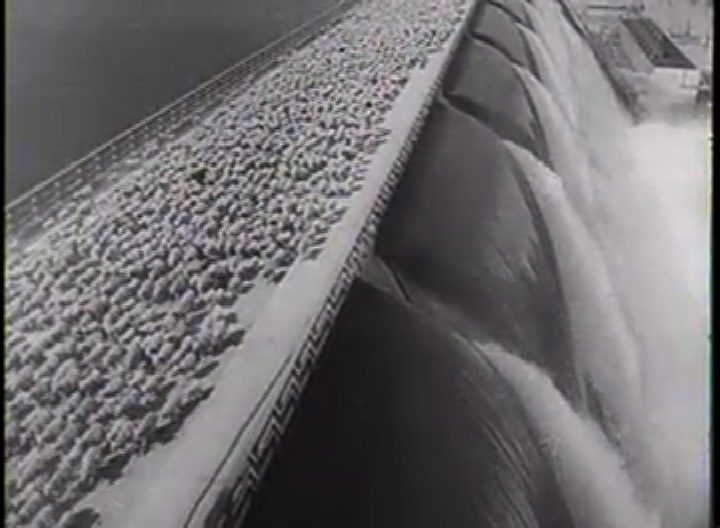
This Department of the Interior film from 1950 highlights the importance of raw material and energy production in fighting the Cold War. Lots of industrial footage is shown of such things as iron foundries, coal mines, and hydroelectric dams, while the narrator repeatedly emphasizes how increasing production of these things is vital to our national defense. The impact on the environment of all this increasing production is not mentioned, but you wouldn’t really expect it would be, apart from the fact that the Department of the Interior is also supposed to be concerned with conservation, a theme that appears in many early DOI films, but not at all here. No surprises, really, but this has some historical interest.

Ratings: Camp/Humor Value: **. Weirdness: **. Historical Interest: ****. Overall Rating: ***.

Don’t Talk to Strangers (film #453 on Prelinger Archive).

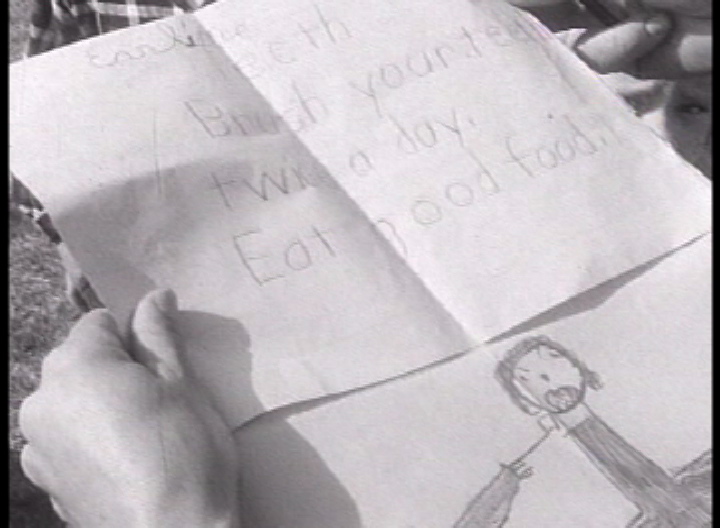
A little girl named Earline encounters a man on her way home from school who tries to lure her into his car. Obviously, she’s watched plenty of Sid Davis films at school, because she immediately turns him down and writes down the license number of the car. Then she takes this information home to her mother, who, amazingly, blows it off. So the next day, the man manages to successfully pick up a classmate of hers who must have been home sick during the showing of The Dangerous Stranger. When her mother calls the school to inform them that her daughter didn’t make it home, the principal conducts a search of the playground, asking every kid there whether or not they saw the missing girl. None of them did, except for one plucky little boy who saw the girl get into the man’s car. At this point, the police are called, and they go through an excruciatingly long process of calling in detectives (including a female detective with cat’s eye glasses that have to be seen to be believed), questioning all the children again, sending out an APB, and patrolling the streets at about 15 miles an hour. Fortunately, the child molester turns out to be too neurotic to work quickly, so by the time a police officer spots his car and picks him up, the girl is unharmed. (In real life, she would have been raped, dead, and buried in a field somewhere by that time, hence the Amber Alert.) All this is told through narration, with overly-dramatic music on the soundtrack. Then the movie focuses on prevention, which amounts to stating that this never happens to nice families who have regular bedtimes for the children. The narrator tells us that Earline’s mom feels guilty for ignoring her child’s report of the strange man, but this is said over footage of her blithely reading a magazine, looking like she hasn’t a care in the world. In this film, the only smart people appear to be the kids. Watch for the cheesy title cards made with plastic letters and the scary drawing Earline made to go with her theme on dental care.

Ratings: Camp/Humor Value: ****. Weirdness: ****. Historical Interest: ****. Overall Rating: ****.

Better Reading

Better Reading . Teenager Harold Wilson has a problem—he can’t read for (expletive deleted). So he has to spend all his free time studying ...